
Brigadier M P Bajwa (retd), commander of the troops that captured Tiger Hill, tells Rediff.com's Archana Masih how a band of young soldiers won the Kargil War's most famous battle with their blood and grit.

'Overlying his idealism was a hatred of war and of all things military. He gave no deep thought to politico-military matters and this prevented him from making sound security decisions.'
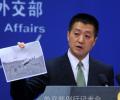
Chinese Foreign Ministry spokesman Lu Kang displayed a photograph of Indian 'incursion' into Donglong area.
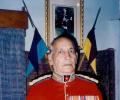
During the World War, Singh fought alongside the Allied Forces in North West Frontier province, Eritrea, Abyssinia (now Ethiopia), Libya, Egypt and Italy.

Here are highlights of the 68th Republic Day parade.

Dr Kalyani Gomathinayagam, a young Indian doctor who volunteered to spend four weeks in west Africa helping those suffering and dying of Ebola, speaks to Vaihayasi Pande Daniel/Rediff.com why she took on an assignment many would shy away from.

Fortunately, there was no cold exposure-related frost bite or bony injuries to him, a medical bulletin issued by the hospital said.

He was the army commander who planned Operation Bluestar. As army chief he planned Operation Brasstacks which rattled the Pakistan army. General K Sundarji was brilliant, ambitious and controversial, remembers Rahul Bedi.

It is a dark legacy bequeathed by Nehru to India. In its DNA lies the subconscious fount of India's schizophrenic geopolitics that forsook in one sweep all its historically-entrenched strategic interests in Tibet in favour of China, says R N Ravi, on the 60th anniversary of the Panchsheel Agreement.

Sanjeev Nayyar suggests 16 measures by which we can tackle our unrelenting and untrustworthy neighbour.

'Pakistan will try to escalate covert operations through terrorism,' says Dr Shalini Chawla.

'The Indian Air Force wanted to fight. My squadron leaders and flight lieutenants, all of us were eager to fight. Unless they are keen I can't have confidence.' Marshal of the Air Force, the legendary Arjan Singh, on the 1965 War.
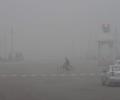
It was another chilly morning in the national capital as icy winds swept the city while early morning fog disrupted rail operations, delaying 52 trains.

The IAF chief stressed on the ongoing development of advanced landing ground along the Himalayas.
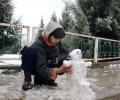
Kashmir Valley on Thursday experienced fresh snowfall with most places, especially the plains, witnessing the first snow of the season, breaking the prolonged dry spell at the fag end of 'Chillai-Kalan', the 40-day period of harshest winter. While the snowfall was mild and brief, it nonetheless brought much joy to the locals.
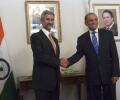
Pakistan's holy trinity -- its government, military establishment and the ISI -- differ on Pakistan's domestic and foreign policy issues. So when India talks to Pakistan's political leadership it can't be sure that the promises can be delivered, says Brigadier S K Chatterji (retd).
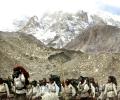
President Ram Nath Kovind presents the President's Colours to the Ladakh Scouts Regimental Centre today, August 21. These are normally presented to units that distinguish themselves consistently over decades. The Ladakh Scouts became a regular army regiment only in June 2001 after its stunning performance in the Kargil conflict, notes Ajai Shukla.

'When war is thrust on you as in 1962 and 1965 or is tempting as in 1971, ensure that all other fronts are kept quiet, leaving your army free to deal with one,' says Shekhar Gupta.

'J&K continues to have the highest concentration of military personnel anywhere in the world and the alienation of the Kashmiri has increased in the last ten years than ever before.'
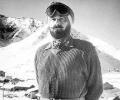
Lieutenant General Harbakhsh Singh, GOC, Western Command, disobeyed the then army chief and took on a superior Pakistani armoured column. The Indian Centurion tanks outgunned the more modern Pakistani Patton tanks in the battle at Khem Karan, that proved the turning point of the 1965 War. Brigadier Gurmeet Kanwal (retd) salutes the Soldiers' General.

'Tying somebody to the jeep is not the military way, but the officer was able to come out of the situation without any bloodshed.' 'I am not supporting him, but I am also not criticising him.' 'He had to use some mechanism to save the uniformed personnel, many of whom were Kashmiri boys of the J&K police,' points out Lieutenant General D B Shekatkar (retd), who was instrumental in the surrender of a record 1,267 terrorists in Kashmir.
Why does the army remain embroiled in counter-insurgency, denying itself a peace dividend even after expending blood and treasure in imposing calm?

On display was India's military might and cultural diversity.

'The thin line is a permanent dilemma with soldiers. You have to appreciate that in that dilemma and chaos there are officers who stand and lead their men.

'The clique that runs that country is treating us like suckers. We are very foolish, giving people money who involve themselves in activity that's harmful to America.' 'When you look at the cold hard facts, Pakistan is not an ally to the United States. They have facilitated, they have encouraged, they have been a protector of enemies.'

'India was in no position to wage another war in 1965, having suffered a morale-shattering defeat in 1962. The three services were in the middle of a modernisation and expansion phase and therefore not fully trained or battle-ready.'

'If the dimensions of the strategic partnership worked out by India and the US seem like a grand alliance targeted at you-know-who, China had better realise that it has fathered it,' says B S Raghavan, a long time observer of China.

'The intrusion in Chumar, during and beyond the Chinese president's visit, is unprecedented and has qualitatively changed the tone of the India-China relationship,' says Jayadeva Ranade, a member of the National Security Advisory Board.

'Our policy seems to be to give away part of J&K, even though we are entitled to the entire state.' 'The Congress has done so, and the BJP is following the same policy.' 'No one is applying their mind to the legal position.' 'Kashmir is not a part of Pakistan under its own constitution.'
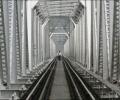
India has planned 14 strategic railway lines in areas bordering China, Pakistan and Nepal, but most of these projects are stuck for want of funds. Anusha Soni reports

Excerpts from Prime Minister Narendra Modi's speech at the Combined Commanders Conference on board the INS Vikramaditya at sea, off the coast of Kochi.

'It was almost as though there was widespread relief that the defence bureaucracy, and the minister, could find someone willing to shoulder the blame for everything that had gone wrong with the services under Antony's charge -- the poor preparedness of the forces, slow acquisitions caused by indecision, cancellation of contracts and whimsical blacklisting of defence contractors over the tiniest suspicion that they may have paid speed money or kickbacks.'
 © 2026 Rediff.com - Advertise with us - Disclaimer - Privacy Policy - Sitemap - Feedback - About us - Terms of use - Grievances